提示词
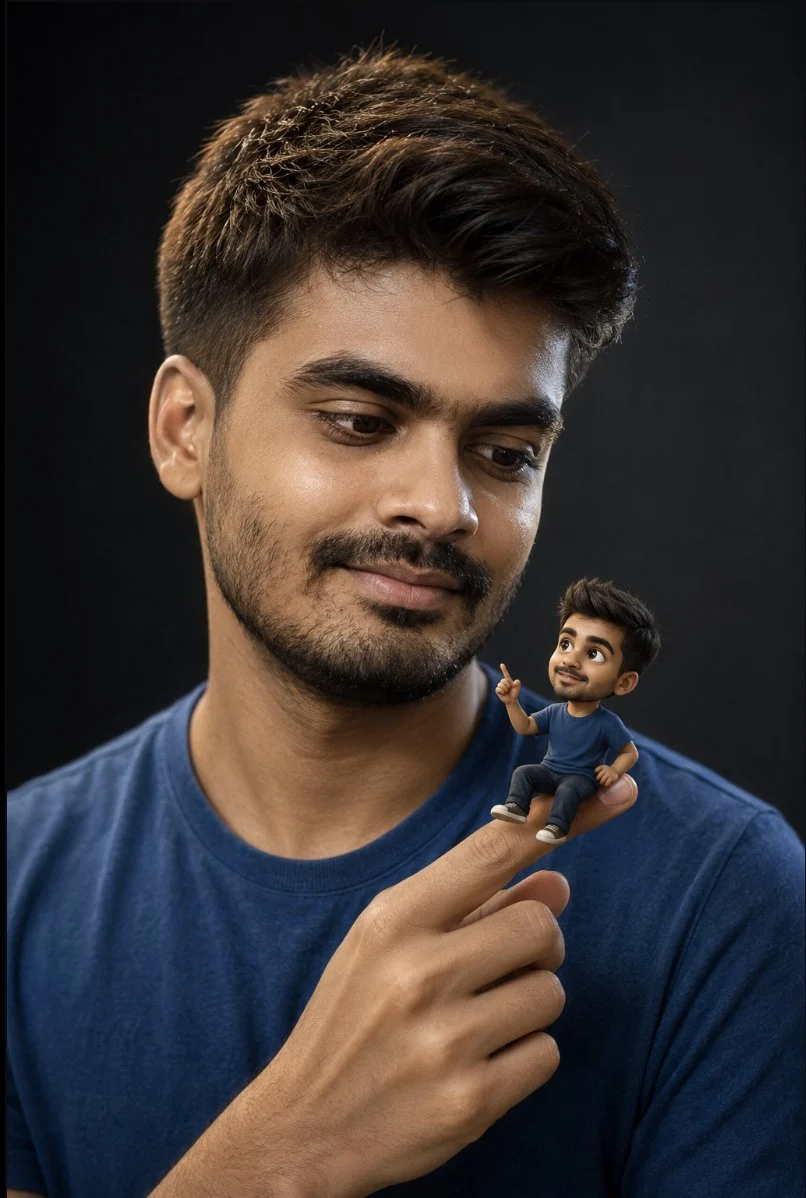
原文 · 英语[Create a highly realistic studio portrait featuring a young man interacting with a tiny 3D miniature version of himself. Use the uploaded photo only as a facial reference for the main subject. Keep his recognizable facial structure, natural skin tone, beard pattern, eyes, nose, lips, jawline, and overall identity consistent with the reference. Give him neatly styled dark hair, a naturally groomed beard, and a relaxed, gentle smile. Dress him in a simple blue T-shirt. The man is shown in a close-up portrait, looking warmly toward the miniature figure sitting on the tip of his finger. The miniature should clearly resemble the same person, but in a charming stylized 3D form with slightly exaggerated proportions, a larger expressive face, bright eyes, and a playful friendly expression. It should wear a matching blue T-shirt and casual dark pants. Create a believable interaction between the real person and the tiny character, making the miniature look naturally balanced on his fingertip. Keep the human completely photorealistic while giving the miniature a polished, high-quality animated 3D appearance. Use a dark, elegant studio background with subtle falloff and soft blur. Add cinematic studio lighting with gentle highlights across the face, realistic skin texture, natural shadows, and soft reflections on the miniature. Composition should be clean and visually balanced, with both the man's face and the tiny character clearly visible. Use a portrait-oriented composition with an 85mm photography look, shallow depth of field, realistic proportions, crisp details, and premium professional studio quality. Avoid excessive cartoon styling on the main subject, distorted facial features, unnatural skin, harsh lighting, oversaturated colors, blurry details, awkward hands or fingers, duplicate characters, or cluttered backgrounds.]