提示詞
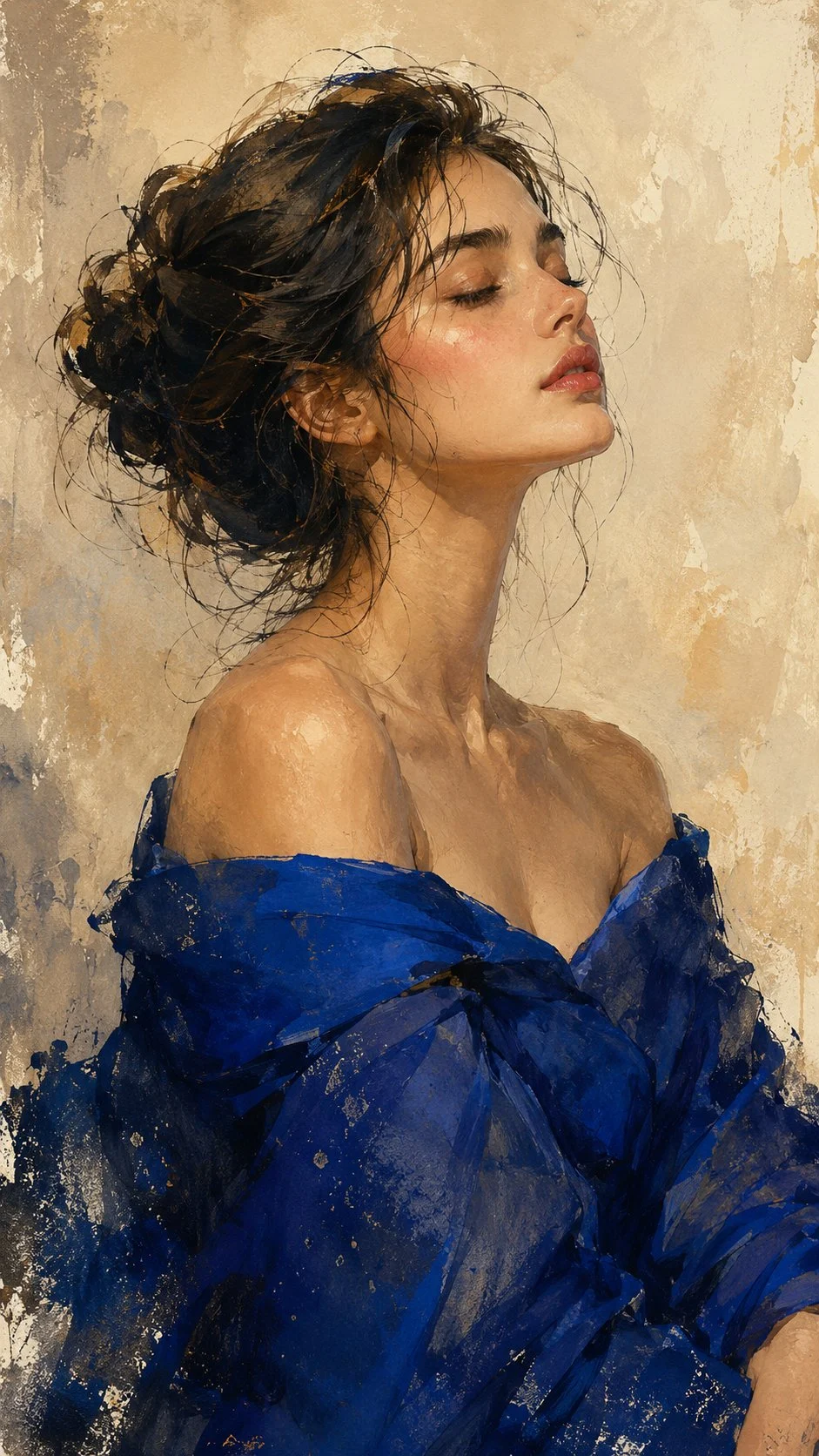
原文 · 英文[Create a refined vertical fine-art portrait of a beautiful adult woman, using the reference only as a general visual inspiration rather than reproducing its exact appearance. She is captured from the waist or chest upward in an elegant three-quarter orientation, her chin subtly raised and her eyes peacefully closed. Her expression feels calm, thoughtful, and quietly emotional. Preserve believable human anatomy, natural facial proportions, softly defined lips, a graceful nose, expressive brows, faint warmth in the cheeks, and authentic skin with fine pores, subtle tonal shifts, and delicate imperfections. Her nearly black dark-brown hair is gathered into a relaxed, loosely constructed updo. The hairstyle should feel spontaneous rather than perfectly arranged, with many lightweight strands drifting around the forehead, temples, ears, jawline, and nape. These loose strands create an airy, romantic outline around the face. She wears a sophisticated deep cobalt-blue off-the-shoulder garment with a relaxed drape across the upper body. The fabric falls naturally around the shoulders and arms, forming broad flowing folds, layered painterly shapes, and soft areas of shadow. The material should feel tactile and luxurious without appearing glossy or synthetic. Visual direction: contemporary impressionist portraiture blended with high-fashion editorial painting. Combine the atmospheric qualities of watercolor and gouache with subtle traditional mixed-media characteristics. Use confident visible brushwork, translucent pigment layers, restrained ink-inspired linework, softly broken edges, gentle color bleeding, selective paint flecks, and understated canvas or fine-art paper grain. The artwork should retain the feeling of a handcrafted gallery painting rather than digital photorealism. Place the subject against a quiet warm ivory-beige backdrop containing extremely subtle abstract washes and imperfect pigment transitions. Keep the environment minimal, allowing generous negative space around the figure. The composition should feel like a premium fashion magazine portrait translated into traditional fine art, with the subject slightly offset from the exact center for a more natural visual rhythm. Illuminate the portrait with broad, diffused light coming from the upper-left. Create soft illumination on the forehead, cheekbones, bridge of the nose, lips, and exposed shoulders. Shadows should remain delicate and atmospheric rather than dramatic. Add only a faint separation light around portions of the hair to distinguish it from the muted background. Use a sophisticated palette built around deep cobalt, ultramarine, subdued navy, warm ivory, sandy beige, muted peach, dusty rose, soft umber, and charcoal. Let colors transition organically through layered paint rather than sharp digital gradients. Maintain restrained contrast, elegant tonal harmony, and subtle cinematic color refinement. Prioritize convincing facial structure, graceful posture, realistic anatomy, natural hair fibers, and believable garment folds. If hands enter the frame, render them with accurate anatomy and relaxed positioning. The final artwork should feel luxurious, intimate, expressive, and timeless, combining contemporary editorial elegance with the tactile imperfections of traditional painting. Fine brush marks, pigment variation, paper texture, and controlled irregularities should remain visible enough to communicate a genuine handmade quality. Avoid: eyewear, sunglasses, logos, branding, lettering, typography, captions, signatures, watermarks, jewelry or unnecessary accessories, anatomical distortions, malformed hands, duplicated facial elements, additional fingers, artificial plastic-looking skin, excessive airbrushing, glossy CGI rendering, cartoon-like anatomy, 3D-rendered appearance, cut-and-paste photomontage, overly sharp digital effects. Vertical composition, 9:16 aspect ratio, sophisticated fine-art editorial mood, high-detail traditional-media appearance, elegant negative space, gallery-quality finish.]